


Artificial intelligence has been evolving rapidly over the past few years, but recently a new term has started appearing everywhere: AI agents. From tech news headlines to social media discussions, many people are asking the same question — what exactly are AI agents, and why do they matter?
This article explains the concept in clear, simple terms, breaks down why AI agents are gaining attention now, and explores how they could affect everyday life in the near future.
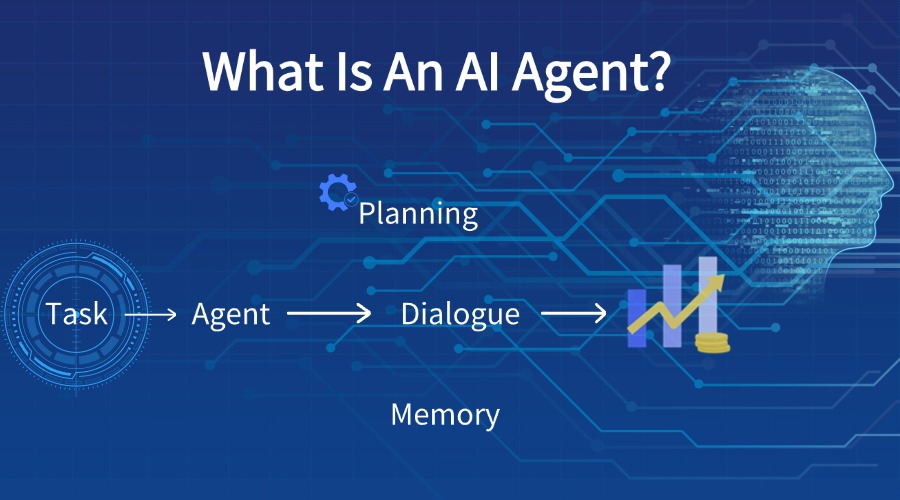
What are AI agents?
AI agents are software systems designed to act independently to achieve specific goals. Unlike traditional AI tools that simply respond to commands, AI agents can make decisions, plan actions, and interact with other systems with minimal human input.
In simple terms, an AI agent doesn’t just answer a question — it can take action. For example, instead of asking an AI to write a reminder, an AI agent could schedule meetings, send emails, and follow up automatically based on your preferences.
How are AI agents different from regular AI tools?
Most people are familiar with AI chatbots or assistants that respond to prompts. AI agents go a step further.
Traditional AI tools:
-
Respond to direct instructions
-
Perform single tasks
-
Stop once the task is complete
AI agents:
-
Operate continuously
-
Make decisions based on goals
-
Adapt to changing situations
-
Can work across multiple systems
This ability to act independently is what makes AI agents more powerful — and more talked about.
Why are AI agents trending right now?
AI agents are gaining attention in 2025 for several reasons:
-
Advances in large language models
-
Better access to computing power
-
Improved automation tools
-
Growing demand for efficiency
Businesses and developers are increasingly interested in systems that can reduce manual work. AI agents offer a way to automate complex processes that once required constant human supervision.
At the same time, public curiosity is growing as people wonder how these systems might affect jobs, productivity, and daily life.
Where are AI agents being used today?
AI agents are already being tested and deployed in various fields:
🏢 Business and productivity
AI agents can manage schedules, analyze data, and automate repetitive office tasks. Some companies use them to monitor performance metrics or coordinate workflows.
🛒 Customer support
Instead of simply answering questions, AI agents can track customer issues, escalate problems, and follow up without human involvement.
💻 Software development
Developers are experimenting with AI agents that can debug code, run tests, and suggest improvements automatically.
🧠 Personal assistance
Future digital assistants may function as AI agents that handle multiple tasks — from booking travel to managing finances — with minimal instructions.
Why do AI agents matter to everyday people?
Even if you don’t work in tech, AI agents could still affect your life in meaningful ways.
-
Services may become faster and more personalized
-
Businesses may reduce costs and improve efficiency
-
Digital tools could handle tasks that normally take hours
At the same time, AI agents raise important questions about privacy, transparency, and control. Understanding how they work helps people make informed decisions about using them.
Are AI agents replacing human jobs?
This is one of the most common concerns.
AI agents are designed to automate tasks, not necessarily replace people entirely. In many cases, they handle repetitive or time-consuming work, allowing humans to focus on creative or strategic tasks.
However, some roles may change over time. Jobs that rely heavily on routine digital tasks could be affected, while new roles focused on managing and supervising AI systems may emerge.
Experts generally agree that adaptation and skill development will play a key role in how AI agents impact the workforce.
What are the risks and challenges?
Despite their potential, AI agents also come with challenges:
-
Decision transparency: It can be difficult to understand how an AI agent makes choices
-
Security risks: Autonomous systems need strong safeguards
-
Data privacy: AI agents often rely on large amounts of data
-
Ethical concerns: Responsibility for mistakes must be clearly defined
Because of these risks, many organizations are moving cautiously and focusing on responsible deployment.
How are companies and governments responding?
Technology companies are investing heavily in AI agent research while also emphasizing safety and reliability. At the same time, regulators in different countries are beginning to discuss frameworks for governing advanced AI systems.
The goal is to balance innovation with protection — allowing useful technology to grow without creating unnecessary risks for users.
What could happen next?
AI agents are still in an early stage, but their development is accelerating. In the coming years, we may see:
-
More advanced personal AI assistants
-
Wider adoption in businesses
-
Clearer regulations and guidelines
-
Increased public awareness and debate
As the technology matures, AI agents could become a normal part of digital life, much like smartphones and cloud services today.
In simple terms, what does this mean?
In simple terms, AI agents are AI systems that can act on their own to get things done. They are gaining attention because they promise greater efficiency, automation, and convenience — but they also raise important questions about control and responsibility.
Understanding AI agents now helps people stay informed as this technology continues to grow.