

Gold prices have been rising steadily in 2025, drawing attention from investors, economists, and everyday consumers alike. Many people are asking the same question: why is gold becoming more expensive right now, and what does it actually mean?
Gold has long been seen as a symbol of stability during uncertain times. When global conditions become unpredictable, demand for gold often increases. This article breaks down the key reasons behind the recent rise in gold prices, explains why it matters, and looks at what could happen next — in clear, simple terms.
What is happening with gold prices in 2025?
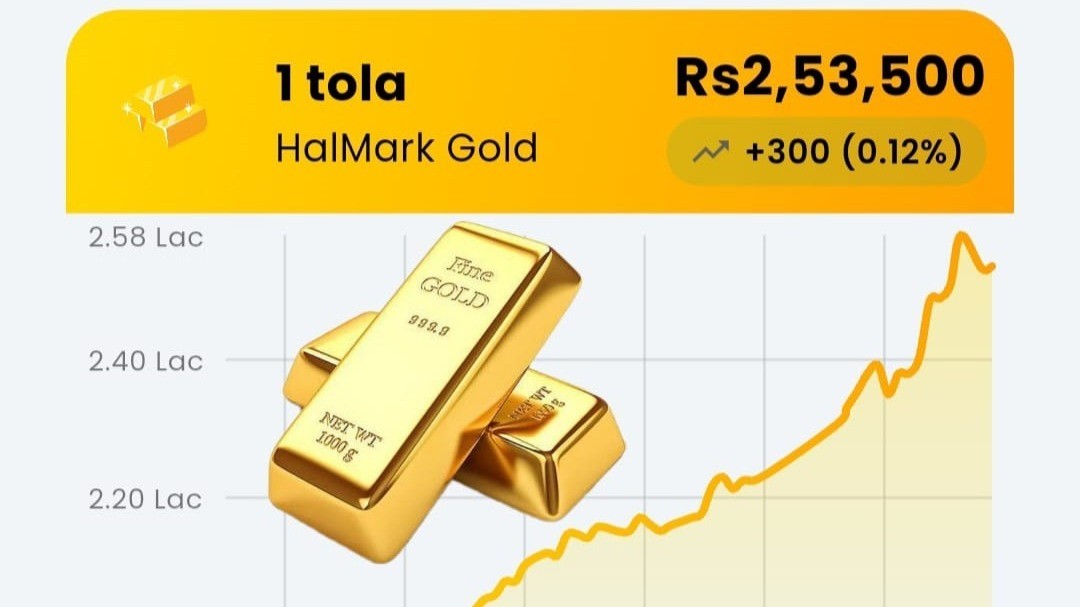
Throughout 2025, gold prices have shown a noticeable upward trend in global markets. In several regions, prices have reached levels close to historical highs. This movement is not caused by a single event, but rather by a combination of economic, financial, and geopolitical factors happening at the same time.
Gold is commonly referred to as a safe-haven asset, meaning investors tend to buy it when they are worried about the future. As uncertainty grows across different parts of the world, more people and institutions are turning to gold as a way to protect their wealth.
Why is this happening now?
The timing of gold’s rise is closely linked to the current global environment. Several developments are influencing investor behavior:
-
Persistent inflation concerns in many economies
-
Slower global economic growth
-
Ongoing geopolitical tensions
-
Uncertainty around interest rate policies
When these factors overlap, confidence in traditional financial markets can weaken. As a result, gold becomes more attractive because it is seen as a stable store of value that does not rely on a single government or financial system.
How inflation drives gold prices higher
Inflation plays a major role in rising gold prices. When inflation increases, the purchasing power of money decreases. This means that over time, the same amount of currency can buy fewer goods and services.
Gold is often viewed as a hedge against inflation because it tends to maintain its value over long periods. As consumers and investors worry about their money losing value, demand for gold increases. This increased demand naturally pushes prices higher.
In 2025, inflation remains a concern in many parts of the world, even as some economies show signs of stabilization. This ongoing uncertainty continues to support strong interest in gold.
The connection between gold and the US dollar
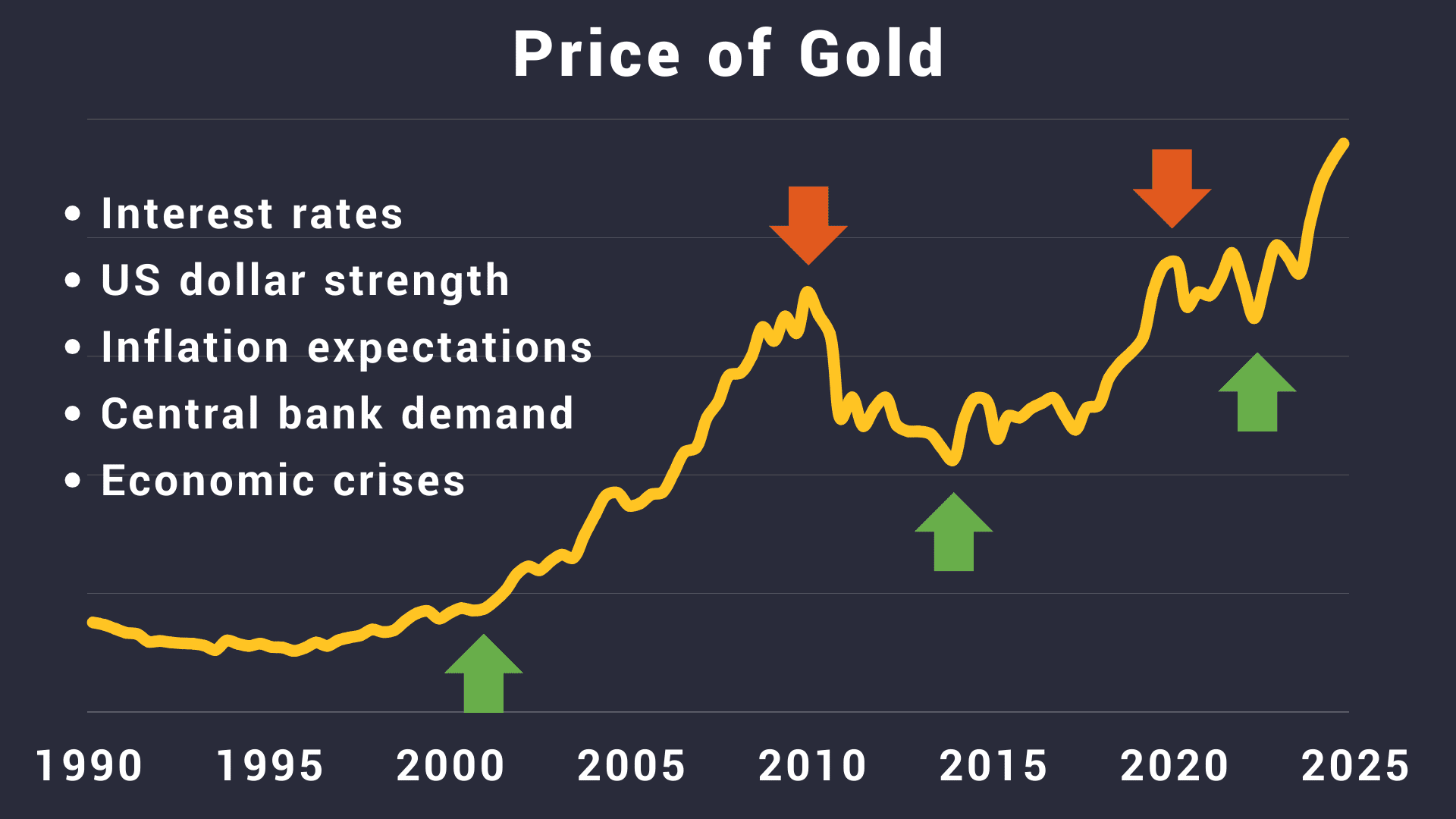
Gold prices are closely linked to the value of the US dollar. Because gold is traded globally in dollars, changes in the dollar’s strength can directly affect gold prices.
When the US dollar weakens, gold becomes cheaper for buyers using other currencies. This often leads to higher demand worldwide, pushing prices up. On the other hand, a stronger dollar can sometimes limit gold’s upward movement.
In recent months, shifts in economic data and expectations around interest rates have added pressure to the dollar. This environment has helped support higher gold prices across global markets.
Why central banks are buying more gold
One of the most important factors behind gold’s rise in 2025 is increased central bank demand.
Central banks around the world have been adding more gold to their reserves. They do this to diversify their assets and reduce reliance on foreign currencies. Gold provides long-term security and is not tied to the performance of any single economy.
When central banks buy gold in large quantities, it sends a strong signal to financial markets. This institutional demand reduces available supply and contributes to higher prices over time.
Supply limits and mining challenges
Gold supply does not increase quickly. Mining gold is a long, expensive process that requires significant investment and time. New mining projects can take years to become operational.
As demand rises faster than supply, prices tend to increase. In recent years, mining output has grown slowly, while global demand for gold — from investors, central banks, and industries — has continued to expand.
This imbalance between supply and demand is another reason why gold prices have remained strong in 2025.
How rising gold prices affect everyday people
Even people who do not invest in gold directly can feel the impact of higher prices.
-
Jewelry costs increase, making gold items more expensive for consumers
-
Savings habits may change, as people explore alternative ways to protect their money
-
Investment products, such as gold-backed funds, may gain more attention
In many cultures, gold plays an important role in traditions and long-term savings. As prices rise, purchasing decisions and financial planning can be affected at the household level.
Is gold always a safe investment?
Although gold is often described as safe, it is not risk-free. Gold prices can fluctuate based on market sentiment, economic news, and global events. Unlike stocks or bonds, gold does not produce income, such as dividends or interest.
For this reason, gold is generally viewed as a long-term store of value rather than a short-term investment tool. Financial experts often recommend including gold as part of a diversified portfolio rather than relying on it alone.
What could happen next with gold prices?
The future direction of gold prices will depend on several key factors:
-
Inflation trends
-
Central bank interest rate decisions
-
Global economic performance
-
Geopolitical developments
If uncertainty remains high, gold prices may continue to stay strong. However, if inflation eases and global conditions become more stable, price growth could slow or experience temporary corrections.
In simple terms, what does this mean?
In simple terms, gold prices are rising because people are looking for safety. Inflation concerns, currency fluctuations, and global uncertainty are pushing investors and institutions toward gold as a reliable store of value.
While prices may continue to change, gold’s role as a trusted asset remains strong in 2025.