

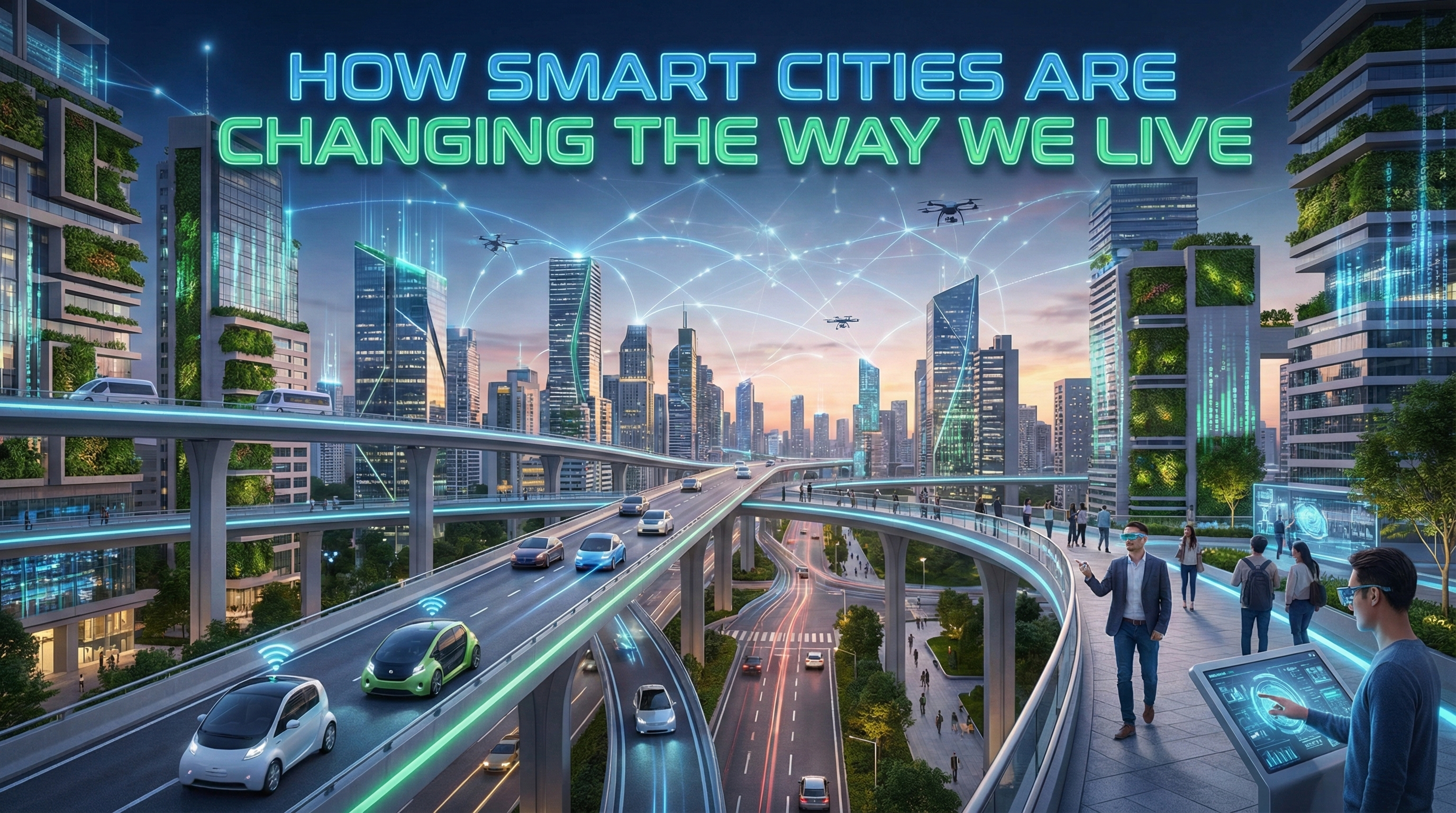
A smart city integrates technology and data to improve urban life. From traffic management to energy use, healthcare, and public services, these cities use advanced digital tools to create efficiency, sustainability, and convenience.
The idea is simple: connect everything — sensors, devices, systems — to a central platform that can analyze and act on real-time data. The goal is to make cities more livable, safer, and environmentally friendly.
Key Components of Smart Cities
Smart cities rely on several critical elements:
-
IoT Devices and Sensors – These gather data on traffic, pollution, energy consumption, and public infrastructure.
-
Data Analytics – Smart algorithms process massive amounts of information, identifying patterns and predicting problems.
-
Connected Infrastructure – Roads, buildings, and utilities communicate with each other to optimize performance.
-
Citizen Engagement Platforms – Apps and portals allow residents to report issues, provide feedback, or access public services.
Together, these components form a dynamic ecosystem where decisions are data-driven and proactive rather than reactive.
Traffic and Transportation
One of the most visible benefits of smart cities is traffic management. Sensors track vehicles, monitor congestion, and adjust traffic lights in real time.
Some cities use smart public transport systems that update commuters with accurate arrival times, route suggestions, and alternative transport options. Autonomous buses and ridesharing networks also benefit from integrated data to reduce delays and improve efficiency.
Energy and Sustainability
Smart cities prioritize energy efficiency and sustainability. Smart grids monitor electricity consumption, detect faults, and adjust supply according to demand.
Streetlights are often equipped with motion sensors, dimming when no one is around. Renewable energy sources, such as solar panels, are integrated into urban infrastructure, reducing carbon footprints.
Water management systems also become intelligent, detecting leaks, monitoring quality, and conserving resources.
Safety and Emergency Response
Public safety is enhanced through real-time monitoring. Surveillance cameras, connected sensors, and predictive analytics help prevent crime, detect emergencies, and respond faster.
In case of natural disasters, smart systems can alert residents, manage evacuation routes, and coordinate emergency services efficiently.
Healthcare and Citizen Wellbeing
Smart cities also improve healthcare delivery. Hospitals and clinics can monitor patient flow, optimize resource allocation, and provide telemedicine services.
Wearable devices connected to city systems can alert authorities in case of health emergencies, and public health data helps track epidemics and design preventative measures.
Economic Benefits
Implementing smart technologies boosts economic efficiency. Businesses can optimize logistics, reduce operational costs, and make data-driven decisions. Cities attract tech startups, investors, and skilled professionals, creating innovation hubs.
Tourism benefits too — visitors can navigate more easily, enjoy safer streets, and receive real-time updates on attractions.
Privacy and Security Challenges
Despite benefits, smart cities face challenges around privacy and security. Collecting vast amounts of personal and public data raises concerns about misuse or breaches.
Cybersecurity measures are essential to protect sensitive information, and transparency is crucial to maintaining public trust. Regulations must balance innovation with privacy.
Global Examples of Smart Cities
-
Singapore – Pioneering smart traffic systems and environmental monitoring.
-
Barcelona – Smart parking, waste management, and citizen engagement platforms.
-
Amsterdam – IoT networks for water, energy, and urban planning.
-
Dubai – Integrated public services with AI-driven analytics for governance.
These cities demonstrate the real-world potential and challenges of integrating technology into urban living.
The Future of Smart Cities
The next generation of smart cities will incorporate AI, machine learning, and predictive analytics on a larger scale. Autonomous vehicles, renewable energy microgrids, and fully connected public services will become more common.
The goal is sustainable, efficient, and human-centered urban life — where technology amplifies quality of life rather than complicating it.
Conclusion: Smart Cities as a Blueprint
Smart cities are not just about gadgets or software. They represent a shift in how humans interact with urban environments, emphasizing efficiency, sustainability, and wellbeing.
By analyzing data and implementing technology responsibly, cities can transform daily life — from reducing traffic jams to improving healthcare, conserving resources, and enhancing public safety.
Smart cities are more than a vision. They are becoming a reality, and understanding their impact helps residents, policymakers, and innovators contribute to a better urban future.