

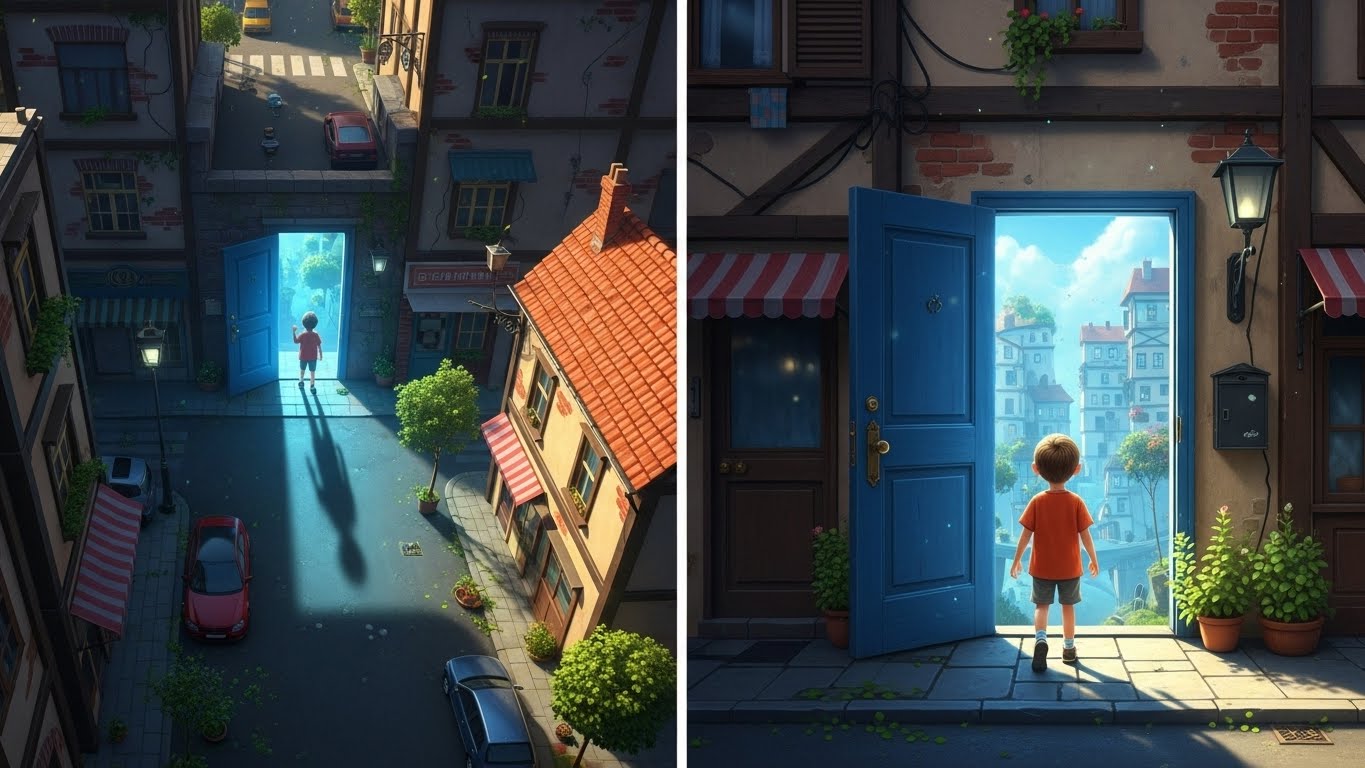
Visual storytelling transports audiences to imaginative realms, blending curiosity, suspense, and wonder through carefully crafted imagery. One of the most captivating narratives involves a hidden world waiting to be discovered. This article presents a visual story titled The World Beyond the Blue Door, following a child who stumbles upon a mysterious blue door that leads to a world remarkably similar to his own—but in which everyone already knows its secrets. Through sequential visuals, atmospheric detail, and immersive storytelling, the audience experiences discovery, intrigue, and the tension between familiarity and mystery.
The Discovery of the Blue Door
The story begins with the child exploring familiar surroundings—an old attic, a hidden alley, or a quiet backyard. Medium and wide shots reveal everyday objects: toys, books, sunlight streaming through windows, and familiar streets. Amid this ordinary environment, a glimmer of blue catches the eye—a small, inconspicuous door tucked away in a corner. Close-ups of the child’s hands reaching for the door, hesitant movements, and focused expressions convey curiosity and anticipation.
Subtle visual cues, such as shadows, reflections, and light beams highlighting the door, emphasize its unusual presence and draw the audience’s attention.
Opening the Door
As the child opens the door, a world unfolds that mirrors his own reality, yet feels distinct. Streets, buildings, and natural surroundings appear familiar but slightly altered: colors are richer, shadows move differently, and objects seem subtly alive. Sequential visuals allow the audience to follow the child’s initial exploration, creating a sense of wonder and curiosity. Overhead shots and tracking shots convey the scope and depth of this alternate world.
First Encounters
Within the new world, the child encounters inhabitants who move with ease and confidence, aware of secrets hidden from ordinary eyes. Medium shots capture gestures, facial expressions, and subtle interactions that suggest knowledge and authority. The audience senses an underlying mystery through visual cues: knowing glances, coded movements, or symbols embedded in architecture.
Close-ups of the child’s reactions—wide eyes, tentative steps, and small smiles or frowns—emphasize emotional engagement without dialogue, inviting viewers to experience discovery firsthand. 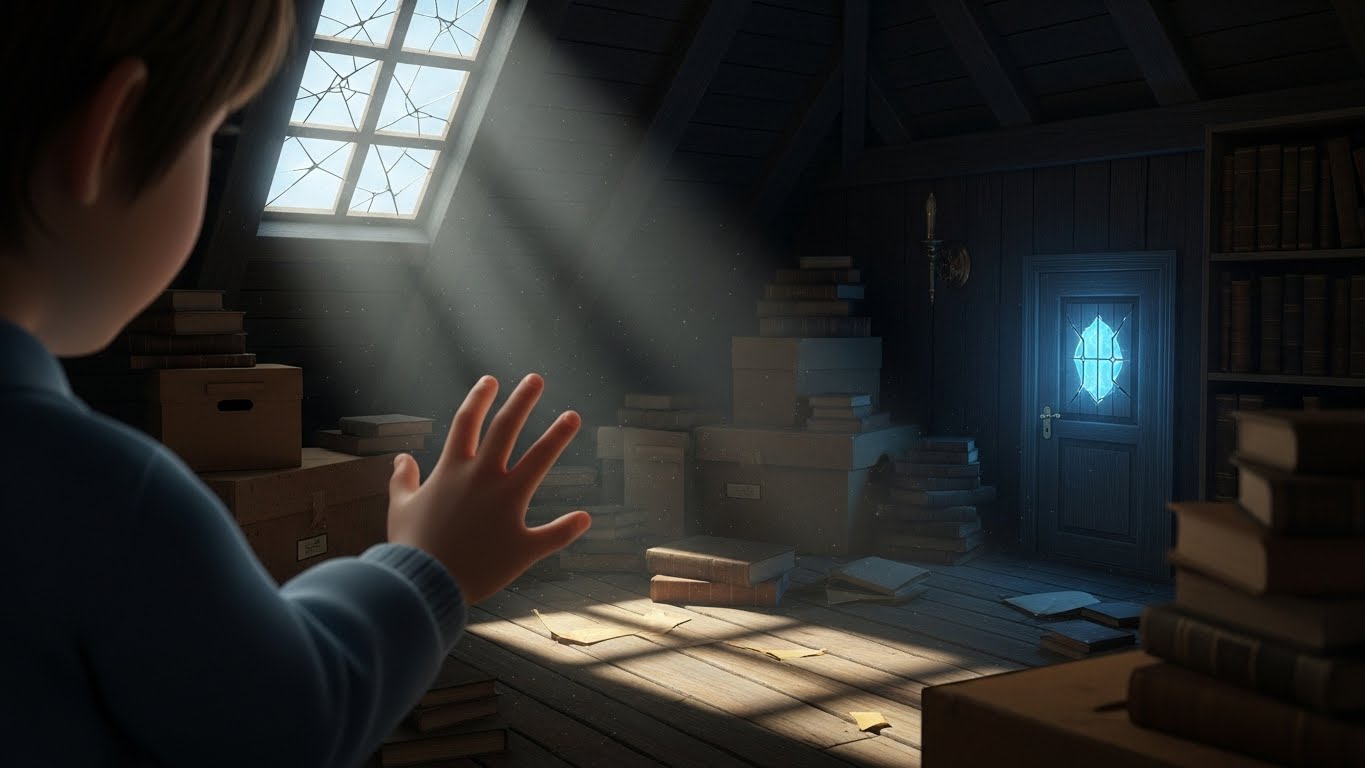
Exploring the Mirror-Like World
The child navigates streets and spaces that mimic familiar locations from his own world: a park, a school, or a neighborhood street. Sequential shots highlight the uncanny similarities, reinforcing the concept of parallel existence. Subtle differences—like objects appearing in unusual places, people repeating certain patterns, or echoes of sounds—create suspense and intrigue.
Visual storytelling uses perspective shifts, dynamic camera angles, and depth of field to convey the child’s sense of awe and disorientation.
Uncovering Hidden Secrets
As exploration continues, the child discovers clues hinting at the secrets known to the inhabitants. Hidden messages, symbolic objects, or peculiar behaviors suggest that this world has rules and knowledge inaccessible to outsiders. Sequential visuals emphasize gradual revelation: the child noticing patterns, piecing together symbols, and interacting with objects that respond in unusual ways.
Close-ups of inscriptions, reflections, or subtle visual anomalies immerse the audience in the investigative experience alongside the child.
Interactions and Guidance
Some inhabitants guide the child through the world, offering subtle hints or demonstrating ways to navigate its mysteries. Medium and wide shots capture these interactions, emphasizing gestures, positioning, and environmental context. Visual storytelling conveys mentorship and understanding without verbal exposition, allowing audiences to grasp relationships and hierarchy through imagery alone.
Emotional Engagement and Tension
The child experiences a mix of curiosity, fear, excitement, and wonder. Close-ups of facial expressions, body language, and hesitant movements communicate internal conflict and anticipation. Visual storytelling maintains tension as the child balances the thrill of discovery with the uncertainty of the world’s rules and secrets.
Gradual Revelation of the World’s Rules
Sequential visuals illustrate the logic and structure governing the parallel world: secret pathways, invisible boundaries, or coded symbols embedded in everyday objects. The child begins to understand how this world functions and how knowledge is shared among its inhabitants. Tracking shots, focus shifts, and framing emphasize learning, comprehension, and the child’s growing confidence.
Climactic Discovery
The narrative reaches its climax as the child uncovers the central secret of the blue door world—why it mirrors his own reality, how knowledge is shared, and the significance of the inhabitants’ awareness. Cinematic visuals, including dramatic lighting, wide establishing shots, and intense close-ups, heighten suspense and emotional impact. The audience experiences wonder, realization, and resolution simultaneously.
Resolution and Reflection
After exploring and understanding the hidden world, the child returns through the blue door to his familiar reality. Wide shots of the transition, soft lighting, and subtle visual cues convey the blending of experience and memory. The narrative emphasizes reflection, curiosity, and the enduring impact of discovery. Audiences are left contemplating the nature of hidden worlds and the mysteries that might exist beyond ordinary perception. 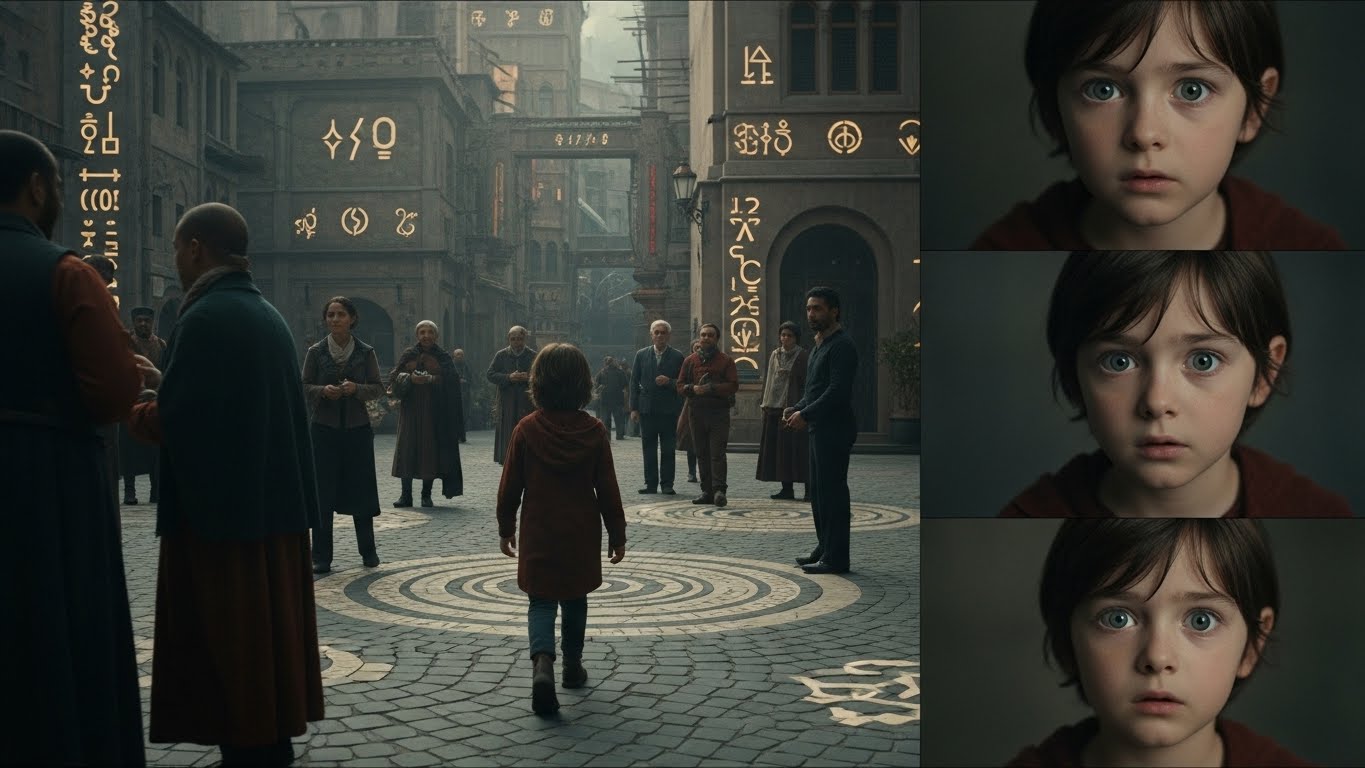
Why This Visual Story Works
“The World Beyond the Blue Door” succeeds because it combines mystery, discovery, and emotional resonance through sequential visual storytelling. The narrative allows the audience to experience discovery, tension, and revelation alongside the child. Through immersive visuals and atmospheric detail, the story communicates complex ideas without relying heavily on dialogue, making it universally accessible.
Adapting for Modern Visual Platforms
This story is highly adaptable for films, short videos, animation, or interactive media. The blue door can be animated to open dynamically, the world’s visual details enhanced through CGI or artistic design, and sequential exploration used to maintain narrative pacing. Social media reels, VR experiences, and interactive storytelling platforms can all leverage the immersive visuals to engage audiences.
Lessons and Themes
The narrative explores curiosity, discovery, secrecy, and the interplay between the familiar and the unknown. It demonstrates how hidden worlds can exist parallel to ordinary life, and how discovery transforms perception and understanding. Visual storytelling communicates these themes effectively, engaging both the intellect and emotions of the audience.
Final Thoughts
The World Beyond the Blue Door is a captivating visual story blending mystery, imagination, and emotional engagement. Through immersive sequential imagery, dynamic framing, and atmospheric detail, it transports audiences into a parallel world that mirrors reality while hiding its secrets. The story illustrates the power of visual storytelling to create wonder, curiosity, and profound emotional impact, leaving a lasting impression on all who explore it.