

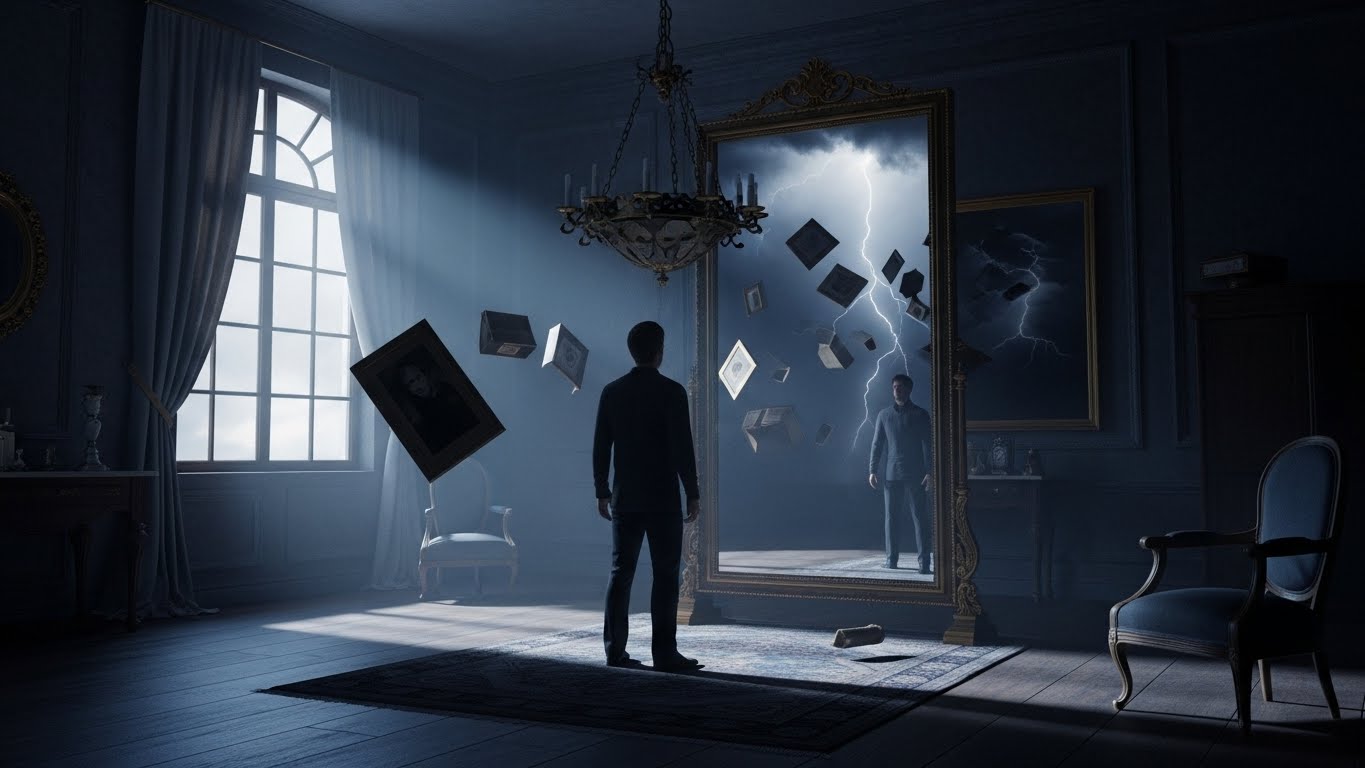
Visual storytelling allows creators to convey mystery, suspense, and emotion through imagery rather than words. One of the most intriguing concepts is a mirror that holds memories of events that haven’t occurred yet. This article presents a visual story titled The Mirror That Holds Memories, following a protagonist who observes the mirror and gradually witnesses events coming to life that were previously only reflections. This narrative uses sequential visuals and atmospheric cues to immerse the audience in suspense and wonder.
Introducing the Mirror
The story begins with the protagonist discovering an ornate mirror in a quiet room. Dust particles float in the sunlight, and the mirror's surface reflects more than just the present. Wide shots reveal the setting: a room filled with ordinary objects, but the mirror emanates a subtle, unusual glow, drawing attention immediately.
This initial visual sets the tone for mystery, signaling that the mirror holds significance beyond a mere reflective surface.
The First Reflection: An Impossible Event
The protagonist looks into the mirror and sees something that hasn't happened yet—a bird landing on the windowsill, a letter appearing on the table, or a visitor knocking at the door. The camera focuses on the reflection while subtly showing the real room in the background, emphasizing the distinction between the mirror’s vision and reality.
Close-up shots of the protagonist's eyes, combined with slight shifts in lighting or shadows, convey wonder, confusion, and curiosity without dialogue. 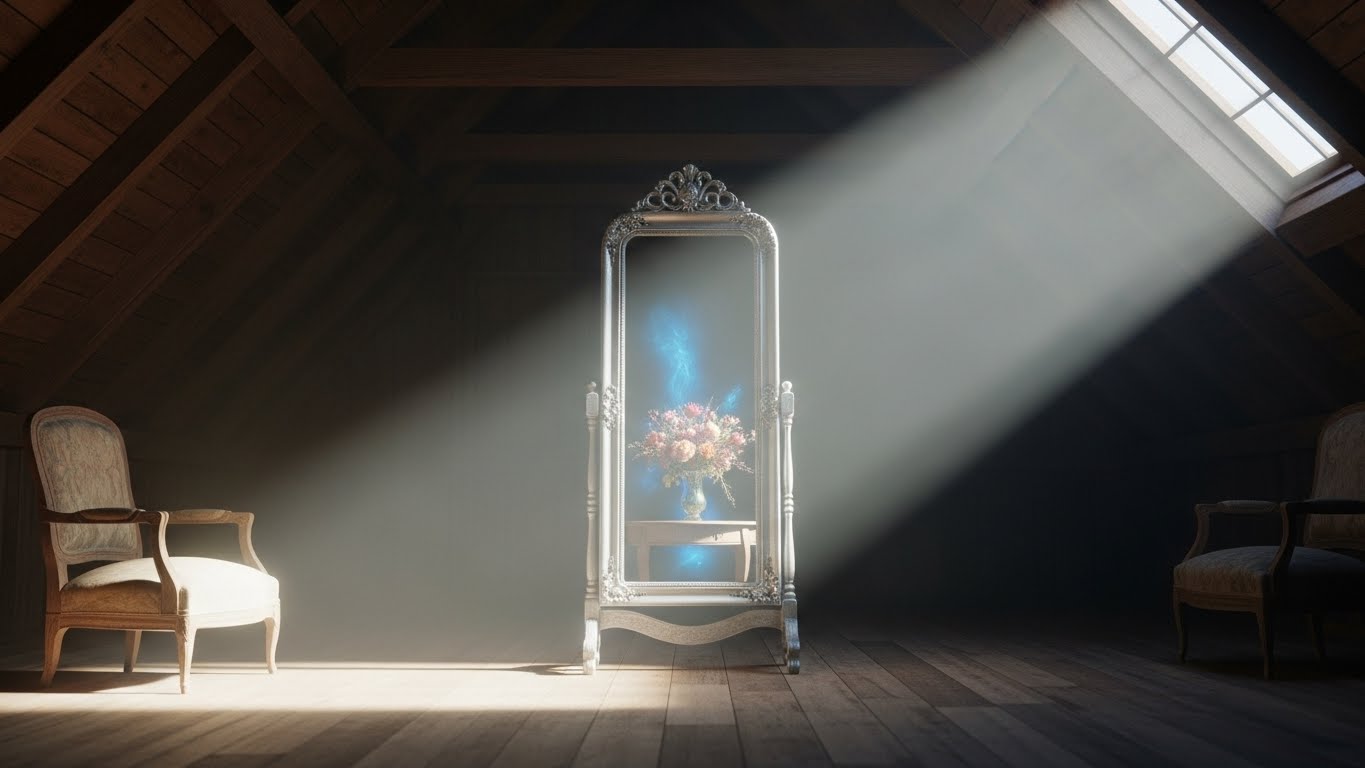
Realization and Curiosity
As the protagonist investigates, they realize that each event reflected in the mirror gradually begins to manifest in real life. Sequential shots show small details materializing—the sound of footsteps matching the reflection, objects moving, or shadows aligning with what the mirror had shown.
This phase uses visual cues, timing, and perspective to build suspense. The audience starts to anticipate how the reflections will translate into reality.
Exploring the Mirror’s Secrets
The protagonist experiments with the mirror, observing different angles, light, and times of day. Visual storytelling highlights the mirror’s unpredictability and the protagonist’s fascination.
Close-ups of hands touching the glass, changes in the mirror's glow, and shifting reflections emphasize the magical quality. The story communicates curiosity, risk, and engagement purely through visuals.
Gradual Manifestation of Events
Sequential visuals depict the events slowly emerging into reality. The reflection of a falling book causes it to tumble moments later. A reflection of a person entering triggers a visitor’s arrival. This gradual unfolding increases tension and excitement, demonstrating the mirror’s power.
The pacing of visuals, timing, and angles create suspense, letting the audience feel the unfolding mystery with the protagonist.
Emotional Engagement and Reflection
The protagonist experiences awe, fear, and contemplation. Close-ups capture facial expressions, gestures, and interactions with objects as events unfold. The mirror becomes a tool for self-reflection and understanding cause-and-effect, all portrayed visually.
By relying on imagery and sequencing, the audience empathizes with the protagonist’s emotional journey.
Revealing Patterns
Over time, the protagonist notices patterns in the mirror’s reflections. Certain objects, locations, or moments repeat. Visual cues—like highlighted symbols, rearranged objects, or changes in lighting—allow the audience to identify patterns without exposition.
This visual pattern recognition deepens engagement, inviting viewers to piece together the story actively.
Climactic Reflection
The final reflection is the most dramatic: an event of significant impact, such as a personal revelation or a life-changing occurrence. Visual storytelling intensifies with cinematic framing, focused lighting, and deliberate pacing.
The protagonist watches as the reflection and reality converge, creating a suspenseful climax that fully immerses the audience.
Resolution and Understanding
After the climax, the mirror’s activity slows. The protagonist steps back, reflecting on the events. Wide shots show the room returning to calmness, while the mirror still glows faintly, hinting at untapped potential.
This ending balances mystery and closure, leaving the audience pondering the mirror’s true nature and the interplay between reflection and reality.
Why This Visual Story Works
“The Mirror That Holds Memories” succeeds because it relies on sequential visuals, suspenseful pacing, and emotional engagement. The narrative unfolds through imagery, enabling a global audience to grasp the story without language barriers.
The story’s combination of mystery, anticipation, and gradual manifestation creates a compelling visual experience suitable for films, animations, reels, or interactive media.
Adaptation for Modern Visual Platforms
The story can be adapted into a time-lapse animation, short film, or social media video. Each reflection can serve as a scene, and careful use of angles, lighting, and timing ensures immersion and clarity.
Sequential framing helps audiences understand the progression of events, maintaining suspense and engagement.
Lessons and Insights
This visual story illustrates the power of showing over telling. By letting visuals communicate cause, effect, and emotional reactions, the audience is invited to actively interpret the narrative.
It also explores themes of anticipation, fate, and self-reflection, making it resonate emotionally across cultures. 
Final Thoughts
The Mirror That Holds Memories is a masterful visual story that blends mystery, suspense, and emotional depth. Through sequential reflections and the gradual manifestation of events, it captivates audiences and demonstrates the universal power of visual storytelling.
The story emphasizes that carefully structured visuals can create profound, immersive experiences without the need for extensive dialogue or exposition, making it accessible and engaging worldwide.